Commerce of the Confederacy
Treaty of Peace and Friendship
The commercial law of Pharaoh's University is the Moorish American Treaty of Peace and Friendship: in force 18 July 1787, renewed at Meknes 16 September 1836.
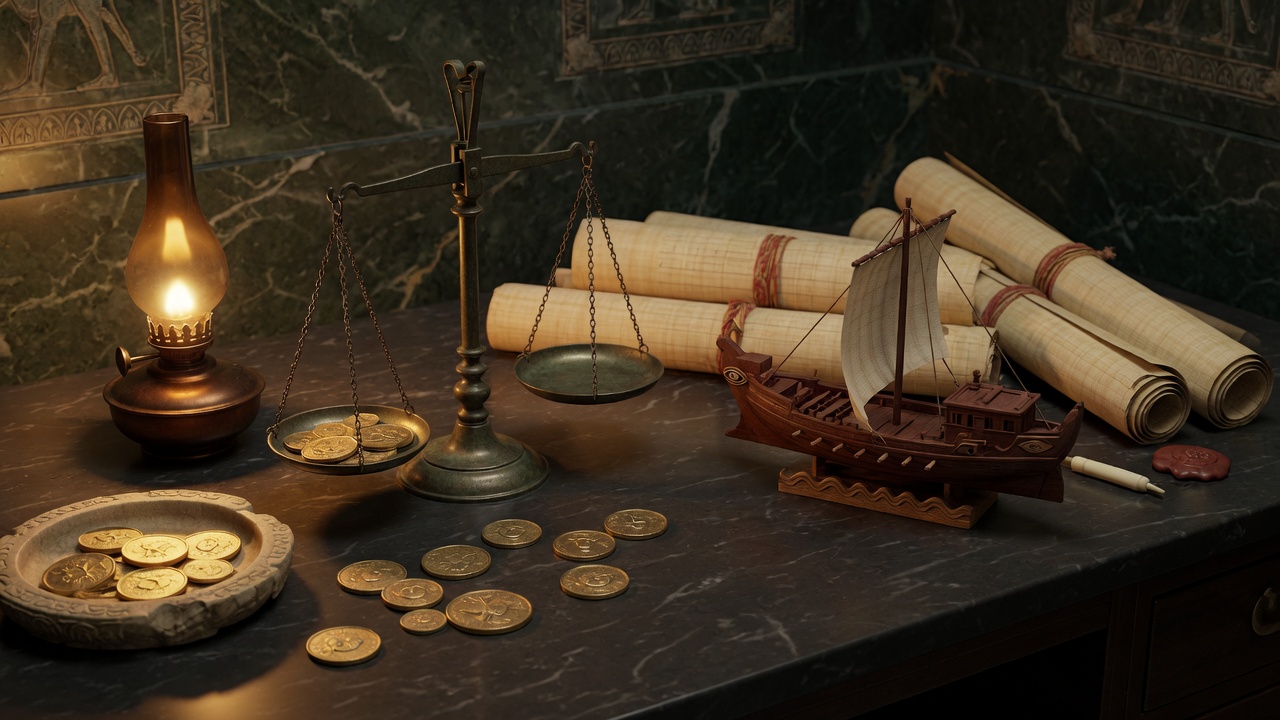
How this compact sits in the house
Sultan Sidi Mohammed III opened Moroccan ports to American ships in 1777. Thomas Barclay negotiated the treaty at Marrakesh. It was sealed in 1786, certified by Thomas Jefferson and John Adams in January 1787, and ratified by Congress on 18 July 1787. It was written as a treaty of peace, friendship, and commerce.
Article 25 bound it for fifty years. When that term ran, James Leib obtained a renewal at Meknes on 16 September 1836 — almost the same twenty-five articles, with the 1786 additional article folded into Article 10, and a clause that after fifty years the treaty continues until one year of notice. That 1836 instrument is the treaty still on the books between the United States and Morocco.
In this university those two instruments are the Moorish American commercial law of the Iroquois Confederation of Nations of Morocco: Wampum 2 (the eastern Great White Root), Wampum 78 (the compact to spread peace), and rafter wampum R-6 through R-9.
The commercial articles, annotated
Students of Commerce read these as the merchant's wampum. English after the 1787 / 1836 texts. Each article is the commercial law of this Confederacy.
Art. 7. A vessel of either party that puts into a port of the other for provisions or supplies shall be furnished without interruption. An American vessel in disaster may land and reload her cargo to repair, without duty.
Art. 14. Commerce with the United States shall be on the same footing as commerce with Spain, or as with the most favored nation for the time being. Citizens shall be respected and have full liberty to pass and repass the country and seaports without interruption.
Art. 15. Merchants of both countries shall employ only such interpreters and assistants as they think proper. No commander shall be forced to shift cargo; no vessel detained longer than he thinks proper. Labor in loading and unloading is paid at the customary rates — not more, not less.
Art. 16. In case of war with other nations, persons and goods of either party found on enemy vessels shall not be made slaves. They are to be set at liberty and their goods restored. A prize is not condemned until it has lain a full year in port.
Art. 17. Merchants shall not be compelled to buy or sell any merchandise except by free consent, save where custom already binds other nations.
Art. 18. Goods to be loaded shall be weighed and examined before they go on board, so the ship is not detained. If contraband is found, only the one who brought it is punished; the ship and her cargo are free of guilt.
Art. 19. Consuls of the United States shall reside in the seaports of Morocco, and shall be treated with respect. They shall not be compelled to pay any duty.
Art. 20. If a subject of either party dies in the country of the other, the consul or a person appointed by him shall take charge of the effects, that they may be delivered to the heirs.
Art. 21. If a vessel is cast away or wrecked, persons and goods shall be treated as those of the most favored nation. Help is to be given; goods are not to be seized as wreck.
Art. 24. If war should break out, nine months are allowed to the merchants of each side to settle their affairs and depart with their property.
Art. 25 (1787). This treaty remains in force for fifty years from the date of ratification.
Art. 25 (1836). The same fifty years, and thereafter the treaty continues until either party gives twelve months' notice of an intention to abandon it.
English rendering of the Morocco–United States Treaty of Peace and Friendship (sealed 1786; in force 18 July 1787) and the Treaty of Peace of 16 September 1836 (Meknes). This university teaches those texts as the commercial compact of the Iroquois Confederation of Nations of Morocco.